
Siberian Husky Training in Dallas–Fort Worth
Who trains Huskies in Dallas–Fort Worth?
Off Leash K9 Training Texas trains Siberian Huskies across Dallas–Fort Worth — building the strongest recall, impulse control, and heat-safe obedience possible for the most independent-minded breed in the dog world. We're honest: Huskies are the hardest breed to train off-leash, and we're the trainers who take that challenge seriously. Rated 4.9★ from 606 reviews. Private lessons from $650; board & train from $2,200. Call (972) 372-9225.
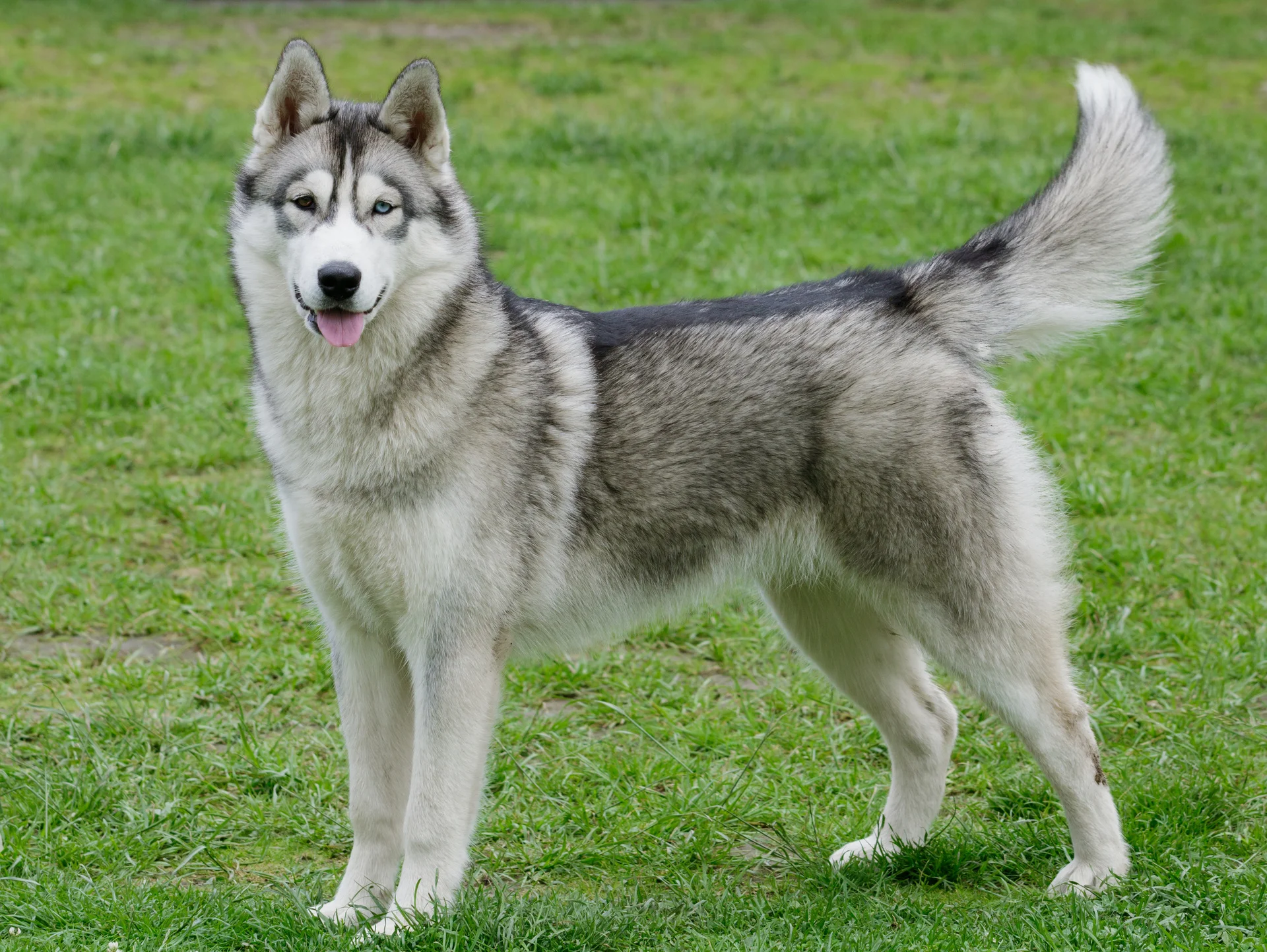
Let's be honest up front: Siberian Huskies are not Golden Retrievers. They are brilliant, athletic, deeply independent dogs who were bred to run 100 miles a day through Arctic wilderness, making their own decisions about terrain, pace, and danger — without looking back at a handler for permission. That breeding produced a dog that is genetically wired to move away from you, fast, and trust its own judgment over yours. Every training approach that works for "eager to please" breeds fails with a Husky, because Huskies don't live to please you. They live to run, explore, and solve problems. Training them means earning their cooperation, not demanding their obedience.
In Dallas–Fort Worth, Husky owners face two additional challenges most breed guides don't address: Texas heat is genuinely dangerous for a double-coated Arctic breed, and DFW's suburban environment — unfenced front yards, busy streets, wildlife corridors — punishes escape behavior harder than a rural property would. We train more Huskies than most facilities in North Texas because we understand the breed honestly, set realistic expectations, and build the best obedience the dog is capable of, which with a good Husky is more than most owners think possible.
Understanding your Siberian Husky
Huskies are not stubborn. That's the wrong word, and using it leads to the wrong training approach. Huskies are independent decision-makers. On a sled team, the lead dog needs to override the musher's commands when the musher can't see the thin ice or the cliff edge. That selective obedience — "I'll follow your direction when it makes sense to me" — is the breed's defining cognitive trait. It's what makes them infuriating to train with traditional methods and fascinating to train with the right ones.
Four traits shape every Husky training program we design:
Prey drive. Huskies have one of the highest prey drives of any companion breed. Squirrels, rabbits, cats, small dogs — anything that runs triggers a hardwired chase sequence. This is not trainable out of the dog. What is trainable is the dog's response at the moment of trigger: we build an emergency recall and a "leave it" that gives the dog a competing reward strong enough to override the chase impulse in most situations. Most, not all — and that honesty matters for safety planning.
Escape artistry. Huskies are legendary escape artists. They dig under fences, climb over 6-foot barriers, open latches, squeeze through gaps that shouldn't fit a 50-pound dog, and sprint. In DFW, this isn't a cute quirk — it's a life-threatening behavior near busy roads. We address containment from multiple angles: reinforcing recall so the dog comes back when called, reducing the underlying motivation to escape (usually boredom or insufficient exercise), and advising on physical containment upgrades for your property.
Vocal communication. Huskies talk. They howl, they "woo," they scream, they back-talk. This is not a bark-collar problem — it's a breed characteristic rooted in pack communication over long distances. We work on reducing demand-howling (the 6 AM alarm clock) and excessive alert-barking while respecting that some vocalization is simply who the dog is. DFW neighbors appreciate the distinction between a Husky who howls at sirens (normal) and one who howls for 8 hours while you're at work (separation distress).
Heat vulnerability. This is the elephant in the room for DFW Husky owners. Siberian Huskies carry a dense double coat engineered for -60°F Siberian winters. Dallas–Fort Worth regularly hits 100°F+ with 60%+ humidity from June through September. This isn't uncomfortable for a Husky — it's medically dangerous. We schedule all Husky training for early morning (before 8 AM) or evening during summer months, use indoor climate-controlled facilities for intensive sessions, and train every owner to recognize heat exhaustion signs: excessive panting that doesn't slow, bright-red gums, glazed eyes, stumbling, or refusal to move.
How we train Huskies
High-value motivation systems
Standard kibble rewards don't work with Huskies — they'll look at you, look at the treat, and decide the squirrel is a better deal. We use high-value motivation hierarchies customized to the individual dog: real meat, play drive, access to desired activities (running, sniffing), and environmental rewards. The dog learns that checking in with the handler is the fastest path to the things it actually wants. This is the foundation everything else builds on, because a Husky who doesn't see the point of listening will not listen, no matter how many times you repeat the command.
Emergency recall
For most breeds, recall is a convenience. For Huskies, it's a safety system. We train a dedicated emergency recall — a specific, never-overused cue paired with the highest-value reward in the dog's life — that the Husky has practiced responding to hundreds of times before it's ever needed in a real situation. This is separate from the everyday "come" command (which Huskies will negotiate with). The emergency recall is the fire alarm: it only sounds when it matters, and the dog's response is reflexive, not deliberative.
Structured leash work
Huskies are born pullers — they literally pull sleds for a living. Traditional "stop when they pull" methods are a war of attrition you'll lose against a breed with more endurance than any human. We teach structured heel position using engagement techniques: the dog walks at your side because that's where the interesting things happen (handler interaction, reward, direction), not because it's been physically restrained. We also incorporate "release" periods where the dog gets to walk at its own pace and sniff, because a Husky who never gets to be a Husky on a walk will fight the leash every step.
Impulse control around triggers
Squirrels, cats, rabbits, small dogs, bicycles, runners — DFW has all the triggers a Husky's prey drive responds to. We build impulse control through progressive exposure: starting at a distance where the dog can notice the trigger without fixating, rewarding the choice to disengage, and gradually decreasing distance over weeks. This is slow, methodical work, and there are no shortcuts. A Husky who reliably ignores a squirrel at 20 feet has been through dozens of sessions to get there. We do the reps because the alternative — a broken leash in traffic — is unacceptable.
Containment and independence training
We work with DFW Husky owners on realistic containment strategies: crate conditioning that makes the crate a positive space (not a jail), graduated alone-time training to reduce escape motivation, and enrichment plans that keep the dog's brain busy during the hours you're away. For owners with yards, we assess fence vulnerabilities and recommend breed-specific solutions (coyote rollers, dig guards, secondary barriers). A Husky who is mentally satisfied, physically exercised, and crate-comfortable is a Husky who stops looking for the exit.
Common Husky challenges in DFW
Blowing coat in Texas
Huskies shed their undercoat twice a year in a process called "blowing coat" — but in Texas, the irregular climate can trigger coat blows at unpredictable times, and the shedding can feel nearly constant. While this isn't a training issue, it's a reality every DFW Husky owner deals with. We include grooming and coat-care guidance in our owner education because a comfortable Husky trains better than an overheated, matted one. Never shave a Husky's double coat — it insulates against heat as well as cold and may not grow back correctly.
Destructive behavior when bored
A bored Husky doesn't sit quietly and wait. It redesigns your couch, excavates your backyard, removes the drywall from your door frames, and howls the soundtrack. Destruction in Huskies is almost always an exercise or enrichment deficit, not spite. Our training programs include a daily enrichment plan tailored to the owner's schedule: frozen Kongs, snuffle mats, puzzle feeders, and structured training sessions that give the dog's brain the workout it needs. This is as important as the obedience commands themselves.
Multi-dog household dynamics
Huskies are pack animals who generally do well with other dogs, but their high energy and play style (mouthy, physical, vocal) can overwhelm calmer breeds. We help DFW multi-dog households establish clear structure: feeding protocols, play management, and individual obedience that each dog responds to independently. For Husky-on-Husky households (common in DFW), we address pack dynamics and prevent resource competition before it becomes a pattern.
The off-leash question — answered honestly
We're called "Off Leash K9 Training," so let's address this directly: can a Husky be trained to be reliably off-leash?
The honest answer: it depends on the individual dog, and the level of reliability will never match a Golden Retriever or a German Shepherd. Some Huskies — typically those with lower prey drive, strong handler bonds, and extensive training — can achieve solid off-leash obedience in controlled environments and familiar locations. Others will always need a long line or enclosed space because their prey drive and independent streak make true off-leash freedom too risky near roads or wildlife.
What we guarantee is that your Husky will have the strongest possible recall and impulse control their individual temperament allows, proofed in real DFW environments. For many Huskies, that means reliable off-leash obedience in parks, trails, and yards. For some, it means outstanding on-leash control and a bombproof emergency recall for the moments that matter. We'll tell you which category your dog falls into after evaluation — before you spend a dollar.
Programs for your Husky
Every Husky is different. A 10-week-old puppy with no prey drive yet is a different project than a 3-year-old escape artist who's already learned that freedom is more fun than listening. We start with a free consultation and match the dog to the right program: board & train for the most intensive foundation-building, private lessons for owners who want to learn Husky-specific handling, puppy training to set habits before the independence kicks in, and off-leash training for Huskies who are ready. See full pricing.
Not sure which program fits?
Find your Husky's training plan
Answer a few quick questions about your Husky's age, behavior, and goals — free, about 60 seconds.
Take the free assessment →Siberian Husky training FAQs
Are Siberian Huskies hard to train?
Huskies are intelligent but independent, which makes them harder to train than "eager to please" breeds like Labradors or Golden Retrievers. They're not being stubborn — they're making a cost-benefit calculation about whether your command is worth following. The key is making compliance more rewarding than the alternative. Off Leash K9 Training Texas uses high-value motivation systems designed specifically for independent breeds, and we train more Huskies than most facilities in North Texas.
Can Huskies live in Texas?
Yes, but it requires careful management. Huskies' double coats insulate against heat as well as cold, but they are still an Arctic breed, and DFW's summer heat (100°F+ with high humidity) is medically dangerous without precautions. Early morning and evening exercise only, access to air conditioning, unlimited fresh water, and never leaving a Husky in a car or unshaded yard. Off Leash K9 Training Texas schedules all Husky training before 8 AM or after sunset during summer and uses indoor facilities for intensive work.
How do I stop my Husky from escaping?
Address the root cause, not just the fence. Huskies escape because they're bored, under-exercised, or see something worth chasing. Increase daily exercise to 60–90 minutes, add mental enrichment (puzzle feeders, nose work, training sessions), and address containment vulnerabilities (dig guards, coyote rollers on fence tops, locked gates). Build a strong recall and crate-train so the dog has a safe, positive space indoors. Off Leash K9 Training Texas includes containment assessment and enrichment planning in every Husky training program.
How much does Husky training cost in Dallas?
At Off Leash K9 Training Texas, Siberian Husky training runs from $650 for a 4-lesson private package to $2,200 for 2-week board & train, up to $5,800 for the 4-week Elite program. Because Huskies need more intensive, repetition-heavy training than most breeds, many owners choose board & train for the strongest foundation. Qualifying programs include lifetime refreshers — especially valuable for a breed that tests boundaries periodically.
Can a Husky be trained off-leash?
Some can, some can't — and we'll tell you honestly which category your dog falls into after evaluation. Huskies with lower prey drive and strong handler bonds can achieve reliable off-leash obedience in controlled environments. Others are safer with on-leash excellence and a bombproof emergency recall. Off Leash K9 Training Texas builds the strongest recall and impulse control each individual Husky's temperament allows, proofed in real DFW environments.
Ready to start with your Husky? Veteran-owned, Dallas–Fort Worth. Realistic expectations, real results.
📞 (972) 372-9225Free consultation with Off Leash K9 Training Texas.