Dogs That Don't Shed: A Dallas–Fort Worth Summer Survival Guide
What dogs don't shed, and are they worth it in a Texas summer?
No dog is 100% shed-free, but low-shedding breeds like Poodles, Goldendoodles, Bichon Frises, and Portuguese Water Dogs release far less loose hair and dander — a real advantage in a Dallas–Fort Worth summer. Off Leash K9 Training Texas trains these coats every day and rated 4.9★ from 598 reviews: low-shedding rarely means low-energy. Call (972) 372-9225 for a free consultation.
It's mid-August in DFW. The porch thermometer reads 106°, the AC hasn't cut off since June, and a fresh tumbleweed of dog hair drifts across the kitchen every time the vent kicks on. If you've ever stood there, lint roller in hand, wondering whether a "dog that doesn't shed" is real or a marketing fairy tale — this guide is for you. And it starts with an honest answer.
Do any dogs truly not shed?
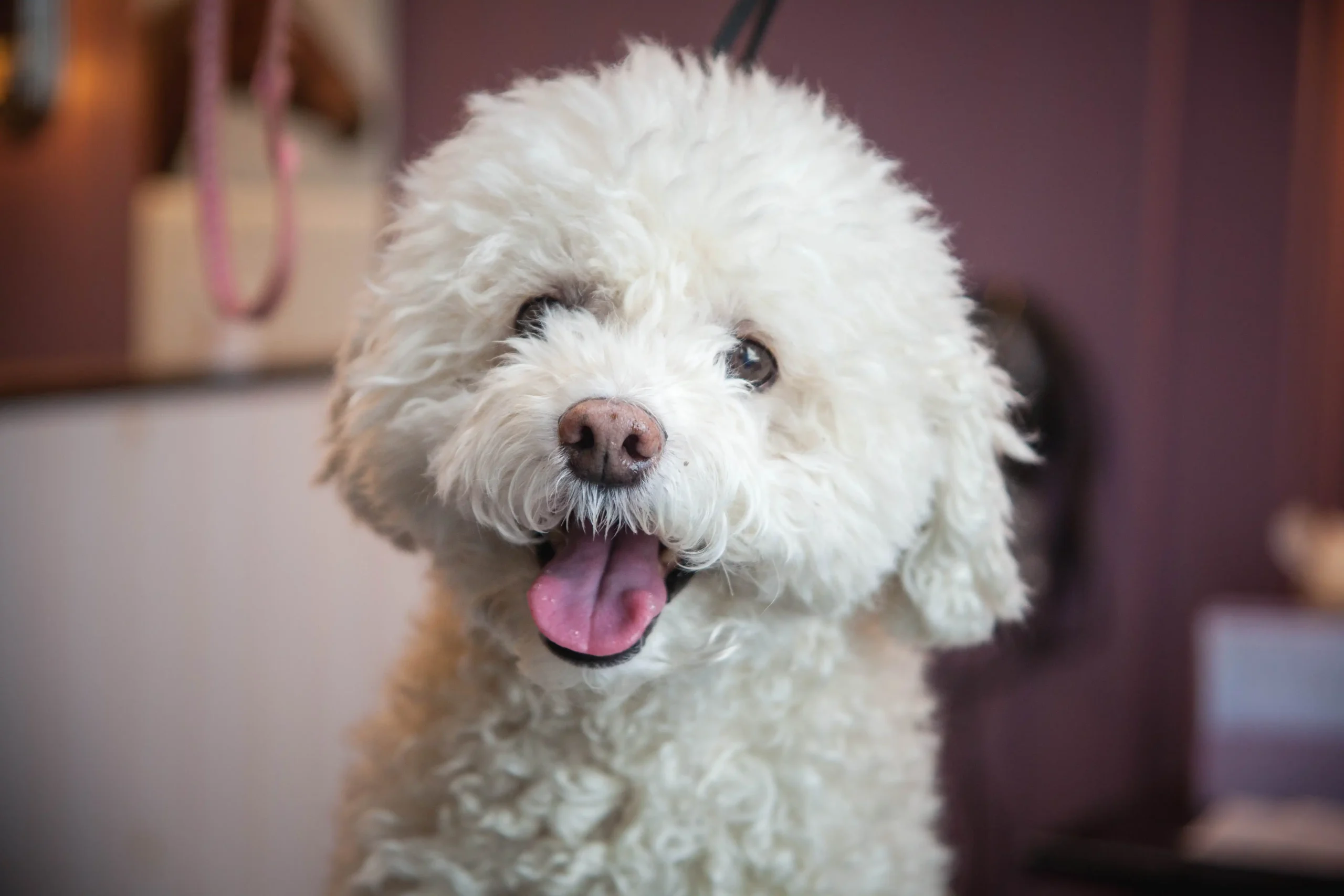
No dog is completely shed-free — every dog with hair loses some. But low-shedding breeds release dramatically less loose hair and dander, and in our climate that's not just a housekeeping win. From April through October, DFW dogs live in the strange in-between of blistering outdoor heat and heavily air-conditioned indoor air — a combination that dries skin, loosens undercoat, and sends dander straight into the air your family breathes all summer.
A heavy double-coated dog — a Husky, a German Shepherd, a Golden Retriever — "blows" its coat as the seasons swing, and in Texas that swing can happen more than once a year. A low-shedding dog sidesteps most of it: less hair in the vents, less dander in the AC, and for allergy-prone households, meaningfully fewer summer flare-ups.
"Low-shedding" is not the same as "hypoallergenic"
Before you spend a breeder's premium, kill this myth: no breed is truly hypoallergenic. Allergies are triggered by dander and proteins in saliva and skin — not by hair itself. Low-shedding breeds simply spread less of it around, so many allergy sufferers tolerate them better. What a low-shedding coat buys you is less of the trigger, not none of it. For a lot of DFW families that's the difference that makes a dog possible — just go in clear-eyed, and spend real time with a breed before you commit.
The low-shedding breeds worth knowing
These are the coats we see most on the training field, and how each handles a North Texas summer:
| Breed | Size | Coat | DFW summer note |
|---|---|---|---|
| Poodle (Toy–Standard) | Toy → Large | Curly, single | Handles heat well in a shorter summer trim |
| Goldendoodle | Medium → Large | Wavy / curly | Popular here for a reason; coat varies by litter |
| Bichon Frise | Small | Curly, plush | Small enough to ride out the heat indoors |
| Portuguese Water Dog | Medium | Curly | Bred for water — an asset at the lake in July |
| Miniature Schnauzer | Small | Wiry | Hardy, low-drama coat; hand-strip or clip |
| Shih Tzu / Maltese / Yorkie | Small | Long, hair-like | Great AC dogs; a summer puppy cut helps |
| Havanese | Small | Silky | Cheerful and adaptable in a short trim |
| Soft-Coated Wheaten Terrier | Medium | Silky, single | Keep trimmed for summer comfort |
Want one that stays small? For low-shedding dogs that stay small, the reliable picks are the Bichon Frise, Maltese, Shih Tzu, Yorkshire Terrier, Havanese, and Toy or Miniature Poodle — compact enough to weather the worst of the heat in the AC without much yard time.
Grooming a low-shedding coat when it's 100°+
Here's the counterintuitive part: low-shedding coats often need more grooming, not less. Because they don't drop hair, they trap it — and trapped hair mats fast against sweaty summer skin.
- Brush more in summer, not less. Matting tightens quickly in heat and humidity.
- Keep a shorter summer trim — but never shave a double-coated dog to the skin. On breeds like Doodles that carry some double coat, the coat insulates against heat as much as cold; shaving it exposes skin to sunburn and can make them hotter.
- Watch the paw pads. Even a low-shedding dog will scorch its pads on DFW asphalt that's been baking since noon.
And a rule that applies to every dog here, coat or no coat: heat is the real summer danger, not hair. Dogs cool through panting and their paws, not their skin, and a Texas afternoon turns dangerous fast. Before your next midday walk, read our guide on heatstroke and summer dog care for DFW owners.
The thing nobody warns you about: low-shedding dogs are smart and busy
This is where families get surprised. The traits that make a dog low-shedding often travel with a working, water, or companion heritage: Poodles were retrievers, Portuguese Water Dogs hauled nets, Schnauzers ratted. Translation — these are clever, high-drive dogs that get bored, and a bored, brilliant dog in a house that's too hot to walk finds its own entertainment, usually your baseboards.
A low-shedding coat solves your laundry. It does nothing for your dog's brain. That's a training question — and it's the one we answer every day. At Off Leash K9 Training Texas, we've trained 10,000+ dogs across Dallas–Fort Worth since 2014, a huge share of them Doodles, Poodles, and the small clever breeds on this list. Our board & train programs are built for the DFW summer: your dog does the focused work in the cool of the day with a professional trainer and comes home with reliable, off-leash obedience — so the walks you do take, in that narrow window before the pavement turns to lava, are calm instead of chaos.
Raising one from the start? Our puppy program and breed-specific Goldendoodle training get the foundation right early. See straightforward, all-inclusive pricing here.
Low-shedding is a coat. Well-behaved is a choice — you can have both.
Not sure where to start?
Which training program fits your dog?
Answer a few quick questions and get a personalized recommendation for your dog — free, no pressure, about 60 seconds.
Take the free assessment →Frequently asked questions
Do any dogs truly not shed?
No dog sheds zero, but the lowest-shedding breeds — Poodles, Goldendoodles, Bichon Frises, Portuguese Water Dogs, Miniature Schnauzers, Shih Tzus, Maltese, Yorkshire Terriers, and Havanese — release far less loose hair and dander than a typical double-coated breed.
Are low-shedding dogs hypoallergenic?
No breed is truly hypoallergenic. Allergies are triggered by dander and proteins in saliva and skin, not by hair. Low-shedding breeds simply spread less of it around, so many allergy sufferers tolerate them better — but you should spend time with a breed before committing.
What are the best small dogs that don't shed?
For low-shedding dogs that stay small, the top picks are the Bichon Frise, Maltese, Shih Tzu, Yorkshire Terrier, Havanese, and Toy or Miniature Poodle — all compact enough to stay comfortable indoors through a Dallas–Fort Worth summer.
Do low-shedding dogs need less grooming?
Usually more. Because low-shedding coats trap loose hair instead of dropping it, they mat easily and need frequent brushing plus a professional trim every 6–8 weeks — especially in Texas heat and humidity.
Do Goldendoodles shed?
Doodles are low-shedding, not no-shedding, and it varies within a single litter depending on which coat they inherit. Wavy and curly Doodles shed least; straighter flat coats shed more.
Should I shave my dog for the Texas summer?
Not if it's double-coated. The coat insulates against heat as well as cold and shields skin from sunburn. Keep a shorter summer trim, but never buzz a double coat to the skin — leave that call to your groomer.
Ready when you are. Whether your low-shedding pup is a Goldendoodle who ignores "come" or a clever little terrier running the household, we can help — and summer is the ideal season to start, since so much of the work happens in the cool indoors.
📞 (972) 372-9225Free consultation with Off Leash K9 Training Texas — veteran-owned, Dallas–Fort Worth, off-leash obedience that sticks.